Understanding the Exotic Animal Abuse Vector Infographic: A Visual Tool for Awareness and Action
What Is the Exotic Animal Abuse Vector Infographic?
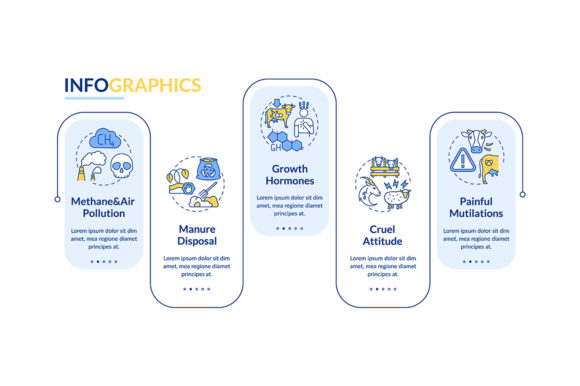
The Exotic Animal Abuse Vector Infographic is a specialized visual communication tool designed to raise awareness about the exploitation and mistreatment of exotic animals. It combines data, narrative, and design elements into a structured visual format that simplifies complex issues surrounding exotic animal abuse. This infographic typically outlines how and why abuse occurs, who is involved, and what can be done to prevent it.
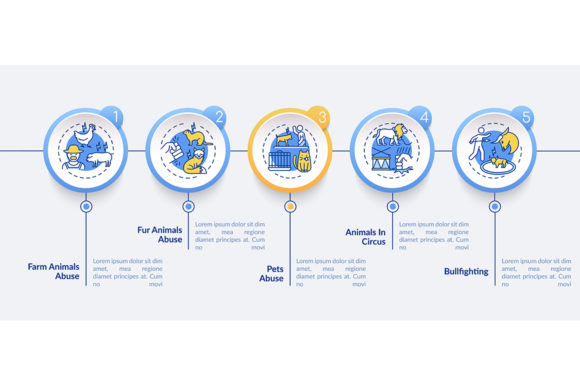
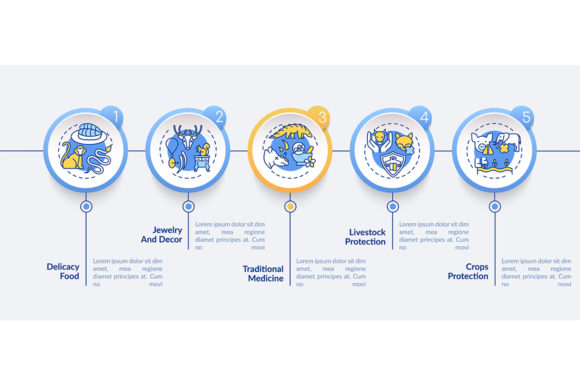
Created using a vector infographic template, it offers scalability and clarity across different platforms and print formats. The design often incorporates a process timeline chart, data visualization in five steps, and a linear workflow layout enhanced with icons. These elements work together to guide the viewer through the issue in a logical, easy-to-understand manner.
Why Someone Might Be Interested in This Infographic
Researchers, educators, conservationists, and policy advocates may find the Exotic Animal Abuse Vector Infographic valuable for several reasons. First, it serves as a powerful educational tool that can be used in presentations, awareness campaigns, or school curricula. Second, it supports data-driven storytelling, which is essential for influencing public opinion and policy decisions.
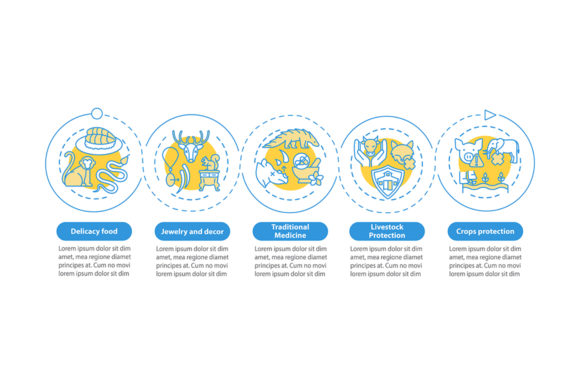
Additionally, professionals in the field of traditional medicine may find the design elements particularly useful. Some exotic animals are targeted for use in traditional remedies, and visualizing this connection can help clarify the ethical and ecological consequences of such practices.
Benefits and Tradeoffs of Using This Infographic
One of the primary benefits of the Exotic Animal Abuse Vector Infographic is its ability to distill a complex issue into a digestible format. It allows users to convey information clearly and persuasively without overwhelming the audience. The inclusion of a 5-step data visualization helps break down the problem into manageable parts, such as identifying abuse hotspots, tracing trade routes, or outlining intervention strategies.
Another benefit is the versatility of the template. The ZIP file includes multiple file formats—EPS, JPG, PNG, SVG, and AI—which ensures compatibility with various design and publishing tools. This flexibility makes it suitable for both digital and print media, from social media posts to academic posters.
However, there are tradeoffs to consider. While the infographic provides a high-level overview, it may not capture the full nuance of regional or species-specific issues. Users must ensure that the data and visuals are accurate and not oversimplified to the point of misrepresentation. Additionally, because the infographic is structured linearly, it may not be ideal for audiences seeking a more interactive or exploratory experience.
Key Considerations Before Using This Template
Before adopting the Exotic Animal Abuse Vector Infographic for your project, consider the following:
- Audience Needs: Who will view the infographic? If your audience includes experts or researchers, they may require more detailed data sources or interactive elements beyond what a static infographic can provide.
- Customization: Does the template allow for easy customization to reflect local data or specific species? The AI and EPS formats support editing, but some design skills may be required.
- Message Clarity: Ensure that the infographic's visual flow aligns with your intended message. The five-step data visualization should logically guide the viewer toward a clear conclusion or call to action.
- Contextual Accuracy: Verify that the traditional medicine elements included in the design are culturally sensitive and factually accurate to avoid misrepresentation or unintended offense.
When This Infographic Is a Strong Fit
This infographic is particularly effective in scenarios where visual storytelling is needed to support advocacy, education, or awareness campaigns. It works well in:
- Nonprofit Campaigns: NGOs focused on wildlife conservation can use it to explain the causes and consequences of exotic animal abuse in a compelling way.
- Academic Settings: Instructors can integrate it into biology, environmental science, or ethics courses to illustrate real-world impacts of human activity on wildlife.
- Policy Briefings: Policymakers and advocacy groups can use the infographic to summarize findings and support calls for legal reforms or enforcement measures.
- Public Health and Education: Institutions focused on traditional medicine can use the infographic to initiate discussions about sustainable and ethical alternatives.
When Alternatives May Be Worth Considering
While the Exotic Animal Abuse Vector Infographic is a robust tool, it may not be the best fit for every situation. Consider alternatives if:
- You Need Real-Time Data: Infographics are typically static and may not reflect up-to-date statistics or changing conditions. Interactive dashboards or digital reports might be more appropriate.
- Your Audience Requires Depth: For technical or academic audiences, a full research paper or data report may be more suitable than a simplified visual summary.
- You Want Audience Interaction: If your goal is to engage users with clickable elements or layered information, a web-based interactive tool could offer more flexibility.
- You're Targeting Multilingual Audiences: Infographics are language-dependent. If you need to reach diverse linguistic groups, consider pairing the visual with multilingual summaries or voiceovers.
Practical Insights for Decision-Making
When evaluating whether the Exotic Animal Abuse Vector Infographic aligns with your goals, ask yourself the following:
- What is the main message? Ensure the infographic’s structure supports the narrative you want to convey.
- Who is the target audience? Choose a design that matches their level of familiarity with the topic and their preferred format.
- Do I have the resources to customize it? If changes are needed, confirm that you have access to design tools and expertise.
- How will it be used? Decide whether it will serve as a standalone resource or part of a broader campaign.
- Is it ethically sound? Make sure the content respects cultural sensitivities and avoids sensationalism or bias.
Final Thoughts
The Exotic Animal Abuse Vector Infographic is a valuable tool for those seeking to educate, advocate, or inform about the pressing issue of exotic animal mistreatment. Its structured visual approach, supported by a clear workflow and timeline, makes it a compelling resource for diverse audiences. However, like any communication tool, its effectiveness depends on how well it aligns with your specific goals, audience, and context.
By carefully evaluating your needs and considering the benefits, limitations, and alternatives, you can determine whether this infographic—and its accompanying design elements—is the right choice for your project.