Infographic Design for Steps in Learning: A Visual Tool for Business and Education
Understanding Infographic Design for Steps in Learning
Infographic Design for Steps in Learning is a visual communication tool that breaks down complex educational or business processes into clear, digestible stages. It merges instructional design with visual storytelling, allowing creators to present sequential information in a structured and engaging format. Whether used for internal training, marketing, or user onboarding, this type of design simplifies comprehension and enhances retention.
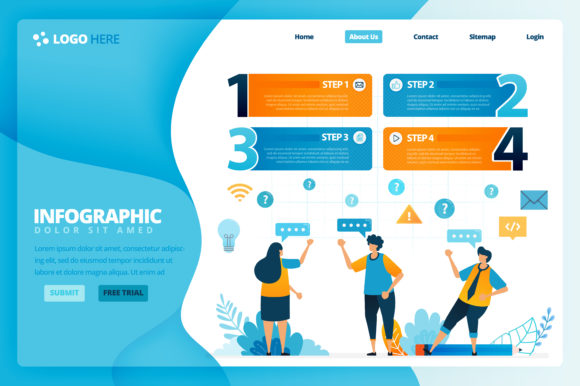
Unlike generic infographics, this design approach is specifically tailored to represent learning pathways, decision trees, or process flows. It often includes human illustrations to make the content more relatable and visually appealing. This combination of structure and style makes it a valuable asset for professionals seeking to improve how their audience absorbs information.
Key Characteristics and Practical Value
At its core, Infographic Design for Steps in Learning is built around clarity and logic. Each step is visually distinct, often using numbered icons, directional arrows, or color-coded segments to guide the viewer. The use of flat vector graphics ensures scalability across different formats—from mobile apps to print brochures—without compromising quality.
- Clarity: Each step is clearly defined and visually separated.
- Scalability: Vector-based formats like EPS 10 allow resizing without quality loss.
- Adaptability: Works across digital and print platforms including banners, flyers, and landing pages.
- Engagement: Human illustrations add a personal, approachable touch.
This design format is particularly effective for explaining multi-phase processes, such as onboarding new clients, teaching a skill, or mapping out a business decision. It's ideal for audiences who need to grasp the big picture quickly without getting lost in text-heavy content.
Real-World Use and Performance
In practical applications, Infographic Design for Steps in Learning has proven effective in both educational and business environments. For example, a small business launching a new product might use it to outline the customer journey from awareness to purchase. Similarly, an online course provider could break down a multi-week curriculum into visual modules to help learners track progress.
One of the key strengths of this design is its ability to reduce cognitive load. Viewers can follow a logical sequence without needing to interpret dense paragraphs. This makes it especially useful for international audiences or those with varying literacy levels.
From a design standpoint, the flat vector format ensures fast load times on websites and retains sharpness when printed. It's also easy to edit, allowing teams to update visuals or text without needing advanced design tools. However, the effectiveness depends on thoughtful layout and consistent visual language—poorly structured infographics can confuse rather than clarify.
Who Benefits Most from This Design?
Professionals who regularly communicate processes or learning paths will find the most value in Infographic Design for Steps in Learning. This includes:
- Educators: To outline course structures or learning objectives.
- Marketers: For customer journey maps or product walkthroughs.
- Trainers: To simplify internal onboarding or compliance training.
- Freelancers: As part of portfolio presentations or client proposals.
- Small Business Owners: For visual guides in operations or customer support.
Creatives working on landing pages or promotional materials will appreciate the flexibility of this format. Because it's available in both EPS and JPG, it can be integrated into design software like Adobe Illustrator or used directly in platforms like Canva or WordPress.
Quality, Usability, and Long-Term Value
High-quality infographic templates are built with consistency in mind—same font styles, uniform icons, and balanced spacing. These details matter when maintaining a professional brand image across multiple assets.
Usability is another strong point. Most templates are layered and labeled, making it easy to customize colors, text, or illustrations. For those without design experience, this means less time spent learning tools and more time focusing on content delivery.
In terms of long-term value, Infographic Design for Steps in Learning offers a reusable format. Once a template is customized for a specific use case, it can be repurposed for similar projects with minimal adjustments. This makes it a cost-effective solution for teams that frequently produce instructional or process-driven visuals.
Practical Recommendations and Limitations
When choosing Infographic Design for Steps in Learning, consider the following:
- Match the design to your brand: Look for templates that allow easy color and font adjustments.
- Test readability: Ensure that the design remains clear even at smaller sizes or on mobile screens.
- Avoid overcrowding: Too many steps or visual elements can overwhelm the viewer.
One limitation to be aware of is that this format works best for linear processes. If your content is highly dynamic or non-linear (such as branching scenarios), a more interactive format may be necessary. Also, while flat design is clean and modern, it may not suit brands that rely on more detailed or realistic imagery.
Final Thoughts
Infographic Design for Steps in Learning is a versatile and effective tool for professionals who need to explain processes clearly and visually. Its strength lies in its simplicity—making it easier for audiences to understand, remember, and act on the information presented. Whether used in education, marketing, or internal communications, this design format supports better engagement and more efficient knowledge transfer.
For those looking to streamline how they present structured information, investing in a well-crafted infographic template can save time, improve communication, and elevate the visual quality of their materials. With the right approach, it becomes more than just a design asset—it becomes a strategic communication tool.